
NASECORE Presses DOE on Oversight of Emergency Power Supply Agreements and EPIRA Compliance
The National Association of Electricity Consumers for Reforms, Inc. (NASECORE) has formally followed up with the Department of Energy (DOE) regarding its earlier call for immediate action to protect electricity consumers from renewed exposure to high and volatile Wholesale Electricity Spot Market (WESM) prices.
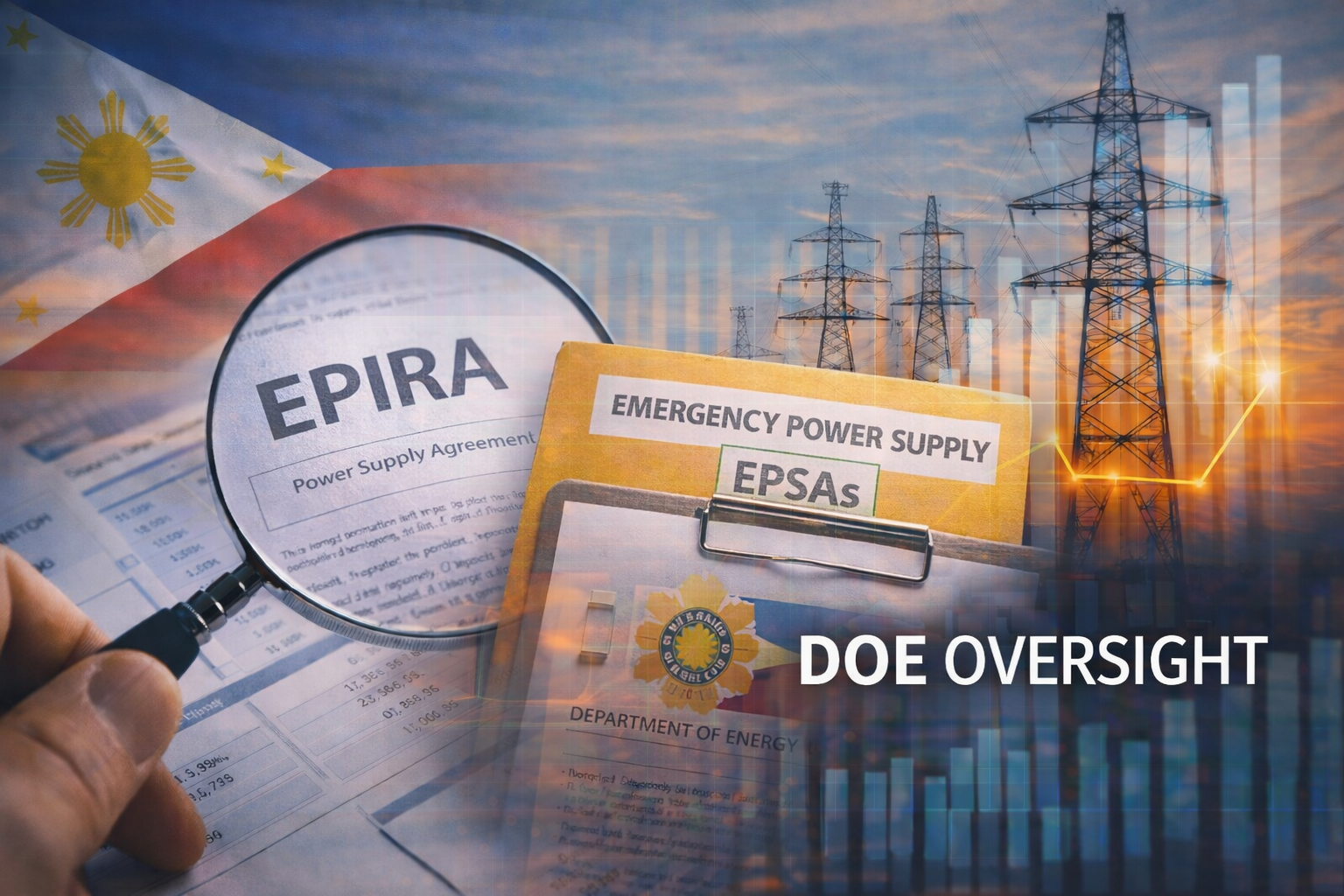
In a letter dated 21 January 2026, addressed to Energy Secretary Sharon S. Garin in her capacity as DOE Secretary and Chairperson of the NEA Board, NASECORE sought clarification and confirmation of the Department’s policy direction and oversight actions concerning the issuance and monitoring of Emergency Power Supply Agreements (EPSAs).
Background: Earlier Call for Immediate DOE Action
On 12 January 2026, NASECORE wrote to the DOE requesting urgent DOE–NEA intervention to prevent consumer harm arising from renewed WESM price spikes amid delays in EPSA processing. The letter asked for a written response or action within five (5) to seven (7) working days, citing the immediate impact of elevated WESM prices on electricity consumers.
As of the date of the follow-up letter, NASECORE noted that no written response, advisory, or clarification had yet been issued by the Department.
Key Clarifications Sought from the DOE
To ensure policy clarity, regulatory coherence, and effective inter-agency coordination, NASECORE respectfully reiterated and sought confirmation of the following core principles:
- EPSAs Are Temporary and Exceptional Measures
Emergency Power Supply Agreements are temporary and extraordinary instruments, intended solely to address short-term supply exigencies. They are not designed—and must not be allowed—to replace regular Power Supply Agreements (PSAs) procured through a Competitive Selection Process (CSP).
- EPSAs Do Not Override Long-Term Procurement Programs
EPSAs do not amend, override, or supplant the Power Supply Procurement Program (PSPP) of Distribution Utilities (DUs), including Electric Cooperatives. These long-term procurement programs are submitted to the DOE in compliance with EPIRA and form the backbone of least-cost, reliable power planning.
- DOE’s Supervisory Role Under EPIRA
Under the Electric Power Industry Reform Act (EPIRA), the DOE is the supervising agency mandated to ensure a reliable, stable, secure, and affordable electricity supply. This responsibility necessarily includes oversight of:
- The issuance of EPSAs;
- Their duration and scope; and
- Their regulatory processing, to ensure consistency with approved procurement programs and the least-cost mandate.
Why Active DOE Monitoring Is Critical
From a consumer-protection standpoint, NASECORE emphasized that active, consistent, and transparent DOE monitoring is indispensable to ensure that:
- EPSAs are issued only under genuine and demonstrable emergency conditions;
- EPSAs remain strictly time-bound and transitional in nature;
- Distribution Utilities and Electric Cooperatives continue to comply with their approved PSPPs; and
- CSP-procured PSAs remain the governing framework for least-cost, transparent, and competitive power supply.
Without clear oversight, emergency arrangements risk becoming prolonged substitutes for proper procurement, exposing consumers to avoidable price volatility.
Request for DOE Monitoring Records
To promote transparency and informed public discussion, NASECORE formally requested the DOE to furnish copies of its monitoring records on all EPSAs issued during calendar years 2024 and 2025.
At a minimum, the requested records should indicate:
- The Distribution Utility or Electric Cooperative concerned;
- The date and period of issuance of each EPSA;
- The capacity and supply coverage involved;
- The dates each EPSA was filed with, and acted upon by, the Energy Regulatory Commission (ERC); and
- Confirmation of any show-cause orders issued by the DOE to regulated entities that failed to file EPSAs with the ERC within the period consistent with their emergency purpose, including written explanations or replies submitted in response.
NASECORE’s Position
Transparency and oversight are not optional—especially during periods of market stress and elevated WESM prices.
The availability and disclosure of DOE monitoring records form part of the Department’s supervisory and monitoring mandate under EPIRA and are essential to:
- Regulatory discipline;
- Institutional accountability; and
- Effective consumer protection.
NASECORE emphasized that the follow-up letter was submitted in a constructive and cooperative spirit, consistent with its continuing advocacy for consumer welfare, regulatory transparency, and faithful implementation of EPIRA.